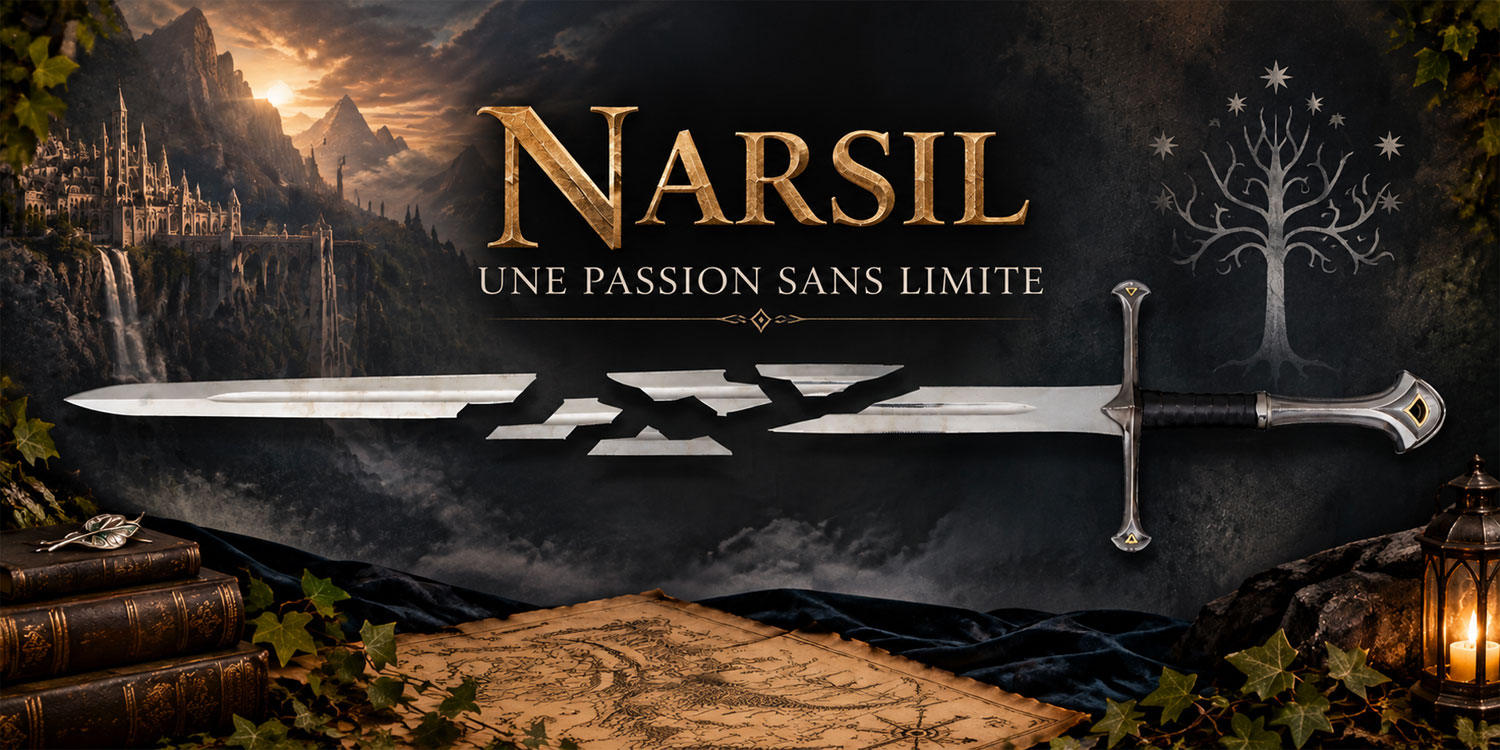





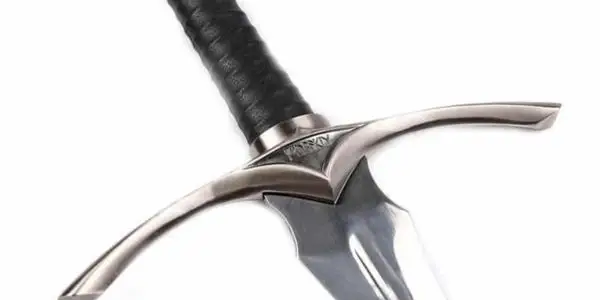
Glamdring is the iconic sword associated with Gandalf in J.R.R. Tolkien’s universe, featured in *The Hobbit* and *The Lord of the Rings*. Its name is generally translated as «Hammer of Enemies,» a simple clue to understanding its aura and narrative function. While the story remains the same across the books and films, the design of the blade and its ornamentation is largely defined by the film version. If you’re considering a Decorative replica of Gandalf's sword (Glamdring), keep these key points in mind: check the size, the quality of the finish, the contents of the package, and whether it includes a display stand suitable for your exhibition space.

You want to learn about Glamdring without getting lost in an encyclopedia, and then choose a decorative replica that fits with your collection, your home decor, or a cosplay project. In just a few minutes, you’ll understand its origins, how the movies actually changed it, and what specific criteria to consider before making your decision. The goal is simple: to give you reliable guidance and a practical checklist so you can avoid unpleasant surprises and enjoy this iconic piece with complete peace of mind.
Glamdring in 60 Seconds: What Exactly Is It?
Glamdring is one of the most famous swords in Middle-earth. Gandalf discovers it at the beginning of his adventure with Bilbo and the Dwarves. This legendary blade stems from an ancient Elvish tradition. It symbolizes a prestigious legacy and a glorious past. However, its significance extends far beyond its feats in battle. Glamdring accompanies Gandalf during many decisive moments, thereby reinforcing his image as a wise and powerful warrior. The film adaptations have also contributed to its popularity. Today, the name Glamdring also refers to decorative replicas inspired by this legendary sword. These models are designed for collecting and display. If you'd like to add to your collection, check out our selection as well The Lord of the Rings: Swords and Jewelry.
- Not to be confused with Orcrist, the sword associated with Thorin, which is often mentioned alongside Glamdring because they were found at the same time.
- Not to be confused with Dard, the iconic little blade carried first by Bilbo and later by Frodo.
- Not to be confused with Andúril, Aragorn's Sword – History and Symbolism, the reforged sword bound to Aragorn's fate.
What does "Glamdring" mean, and where does it come from in Tolkien's lore?
Meaning of the name and most common translation
The name Glamdring is most often rendered in English as «Foe-hammer,» which helps convey the idea: a blade whose reputation is tied to its power against enemies. In French, a translation such as «Marteau des ennemis» is commonly used, which is more of an equivalence in meaning than a literal translation. According to Eldamo (etymology of “Glamdring”), a Tolkien linguistic resource specializing in Elvish languages, Glamdring does indeed refer to this notion of a «hammer» applied to adversaries, which aligns with the way Tolkien assigns an almost symbolic role to named weapons. For a reader, this meaning serves above all as a compass: Glamdring is not just any sword; it is a name steeped in history and meaning.
Origins and Journey to Gandalf
In the lore, Glamdring is associated with Gondolin, a prestigious Elven city, and with a history that extends far beyond the era of *The Hobbit*. The turning point for the story as you know it is its rediscovery during Bilbo’s adventures, when the sword reappears and finds a new bearer: Gandalf. From then on, it naturally accompanies him throughout the epic, serving as a visual and narrative marker of his stature. To delve deeper without weighing down your reading here, Tolkien Gateway is often cited as a go-to resource among scholarly fans, particularly for cross-referencing mentions across the various works.
Glamdring in the Movies: What the Film Version Really Changes
Books primarily provide references to prestige and heritage, while films establish a specific aesthetic: proportions, the shape of the guard, ornamental details, and the overall impression of a «noble relic.» This is often where the differences that interest collectors arise: a single named sword may exist, for a film shoot, in several prop variations depending on the needs of the scene, safety, and handling. In other words, when you see «Glamdring (movie version),» you’re primarily buying a standardized visual interpretation that has become the popular standard, sometimes with variations in finish depending on the edition of decorative replicas.
The key point to remember regarding credibility is simple: The Wētā Museum (Glamdring prop) presents Glamdring as a documented film prop, with a design and manufacturing context tied to workshop craftsmanship. This «props» resource is useful for understanding why certain design details consistently reappear in movie-inspired replicas. It is not intended to promise universal «authenticity,» but rather to explain the origin of the visual language that fans recognize at first glance.
How to Choose a Decorative Replica of Glamdring Without Making a Mistake
Choose Based on Your Needs
Choosing the right decorative replica of Glamdring depends less on a universal «best model» than on your intended use. First, ask yourself how you plan to use it, as this will determine the size that works best for your space, the type of display stand, and the level of detail you’ll actually appreciate on a daily basis.
- Eye-catching wall decor: Opt for a bold visual presence, a sturdy backing, and a uniform finish, since everything is visible from a distance.
- Display and Collection: Look for a cohesive theme, details that are visible up close, and a polished presentation of the package.
- Cosplay: Focus on comfort and portability, and be sure to check the rules of the event where you’ll be wearing it.
- Fan gift: It’s often the presentation, the included accessories, and the «unboxing» experience that make all the difference.
Checklist of Criteria to Review Before Purchasing
To compare decorative replicas without getting confused, use a short, practical checklist. Reliable technical specifications often use standard terminology, particularly when describing accessories and presentation; United Cutlery’s technical document is a good example of this type of terminology, although you don’t need to go into excessive detail to make a decorative choice.
- Listed dimensions: important to avoid surprises upon delivery and to check compatibility with your wall, display case, or room.
- Materials and finishes: These determine the visual appeal, the «collectible» feel, and ease of maintenance.
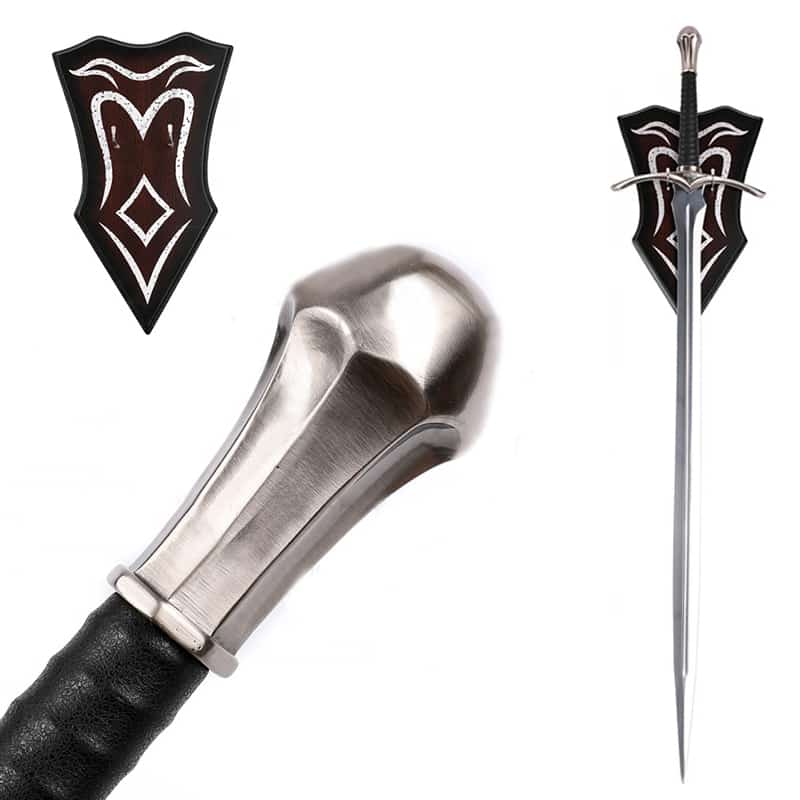
- Package contents: includes a presentation support (wall-mounted or display stand, depending on the model), a sleeve, a display plate, or even a certificate, depending on the version, as this changes the display experience.
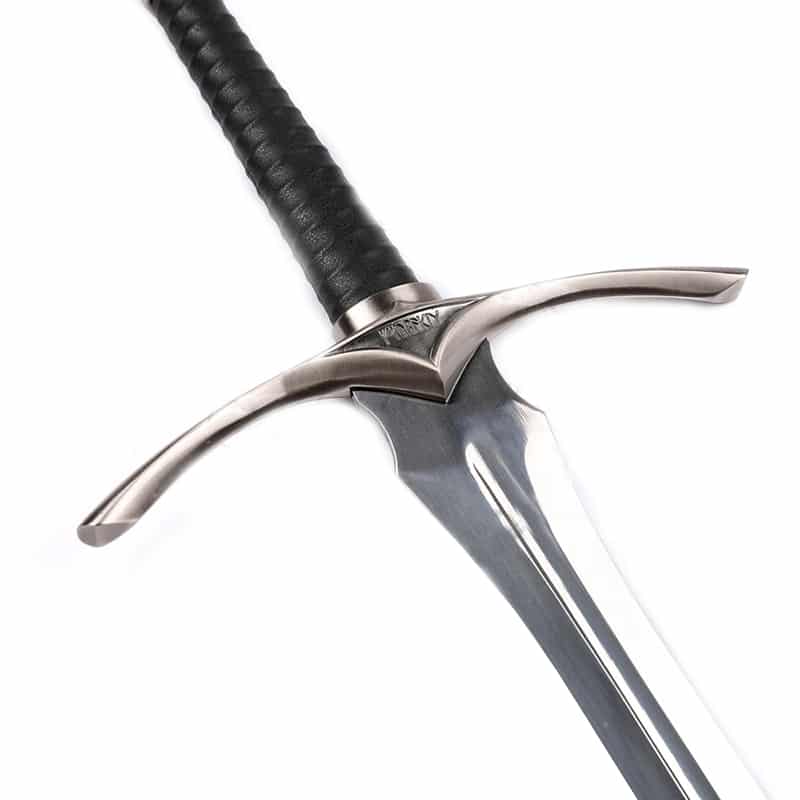
- Level of detail: engravings, pommel, guard, and consistency of the finish—especially if you're displaying it at eye level.
- Shipping and Return Policies: A practical consideration that matters when shipping a bulky item that needs to arrive in perfect condition.
Finally, keep the context clear: a decorative replica is a collector’s item meant for display. It is designed for exhibition, set design, and cosplay within established guidelines—not for actual use.
Displaying and Caring for Glamdring: Decor, Safety, and Preservation
Four Easy-to-Replicate Display Ideas
Glamdring works particularly well as a centerpiece because it’s instantly recognizable and «tells a story» about a world. The idea isn’t to overdo it, but to create a cohesive setting where the decorative replica becomes a focal point, without cluttering the space or making it difficult to dust or access.
- Fantasy gallery wall: Pair the replica with a few neutral and themed pieces to create a clean, cohesive, and easy-to-follow personal museum-style display.
- Tolkien Book Corner: Place the sword near the books, with warm, soft lighting, to create a cabinet of curiosities effect.
- Collection display case: A dark background and subtle lighting highlight the silhouette and details without overexposing the piece.
- A "magician-themed" office: just a few complementary decorative items are enough to set the mood while keeping the workspace functional.
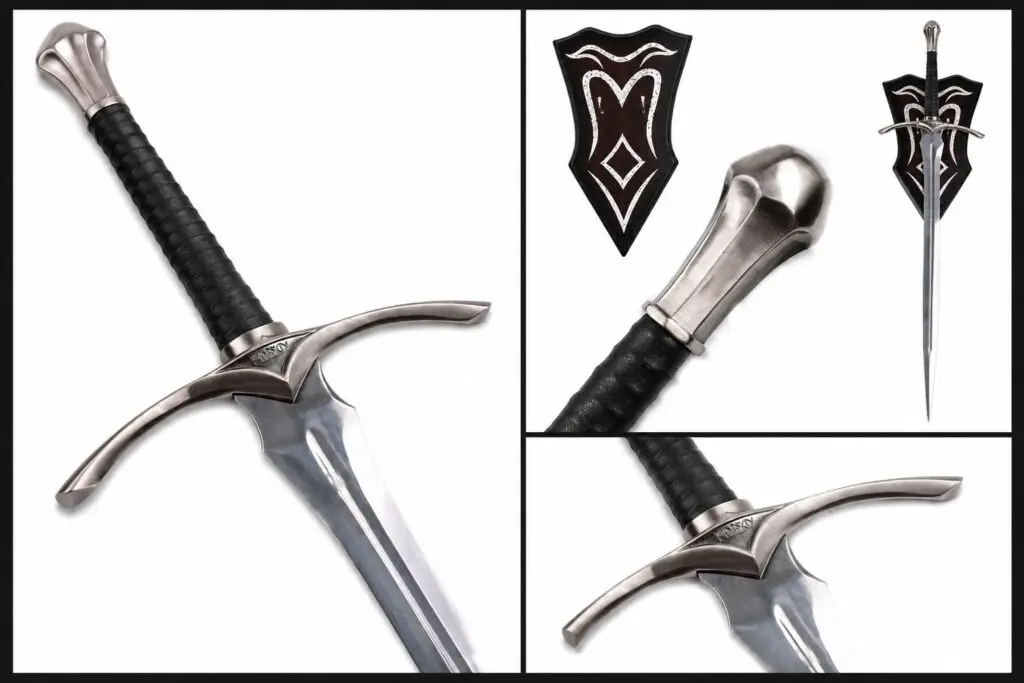
Simple Maintenance and Precautions
A decorative replica is still an object exposed to dust, ambient humidity, and handling. Following a few simple best practices can prevent most problems and keep it looking «new» without requiring a complicated routine. The goal is to minimize smudges, micro-scratches, and the risk of the item falling, especially if it’s placed high up or in a high-traffic area. If you’d like a step-by-step guide, our Care Guide (Tips for Decorative Replicas) includes simple steps that you can adapt to your environment.
- Dust with a soft, dry cloth, and avoid harsh cleaning products that can leave marks on certain finishes.
- Handle the item with clean, dry hands, holding it firmly to minimize smudges and slipping.
- Avoid very humid areas and sudden changes in humidity, as they are detrimental to the preservation of surfaces.
- Make sure the display stand is suitable and securely fastened, especially when displaying items on a wall or a narrow shelf.
- Keep out of the reach of children and pets, and choose a location where it is unlikely to be knocked over.
- When transporting the item, be discreet and protect it, especially when traveling to a cosplay event with specific rules.
Conclusion
Glamdring is much more than just a famous name: it’s the sword associated with Gandalf, steeped in Tolkien’s lore and has become an iconic visual symbol thanks to the movies. To choose a suitable decorative replica, base your decision on how you plan to use it (decoration, display, cosplay, or gift), then check simple details such as size, finish, and package contents, so you can display your piece with style, safety, and peace of mind.