




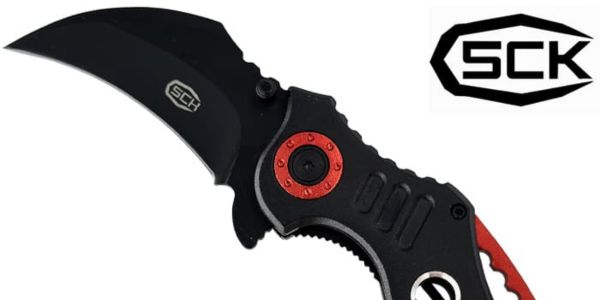
The karambit is intriguing at first glance: a compact silhouette, a curved “claw” blade”, and, above all, that distinctive ring at the end of the handle. Born in South-East Asia, it has now become an iconic object for all those who love cutlery, but also for fans of pop culture and gaming.
In this article, you'll be able to clearly define what a karambit is, understand the origin of its shape and see why it fascinates collectors so much. Finally, you'll find a simple checklist for choosing a suitable piece for a collection, geek decor, cosplay or gift.
Karambit: a simple definition (and what makes it recognizable)
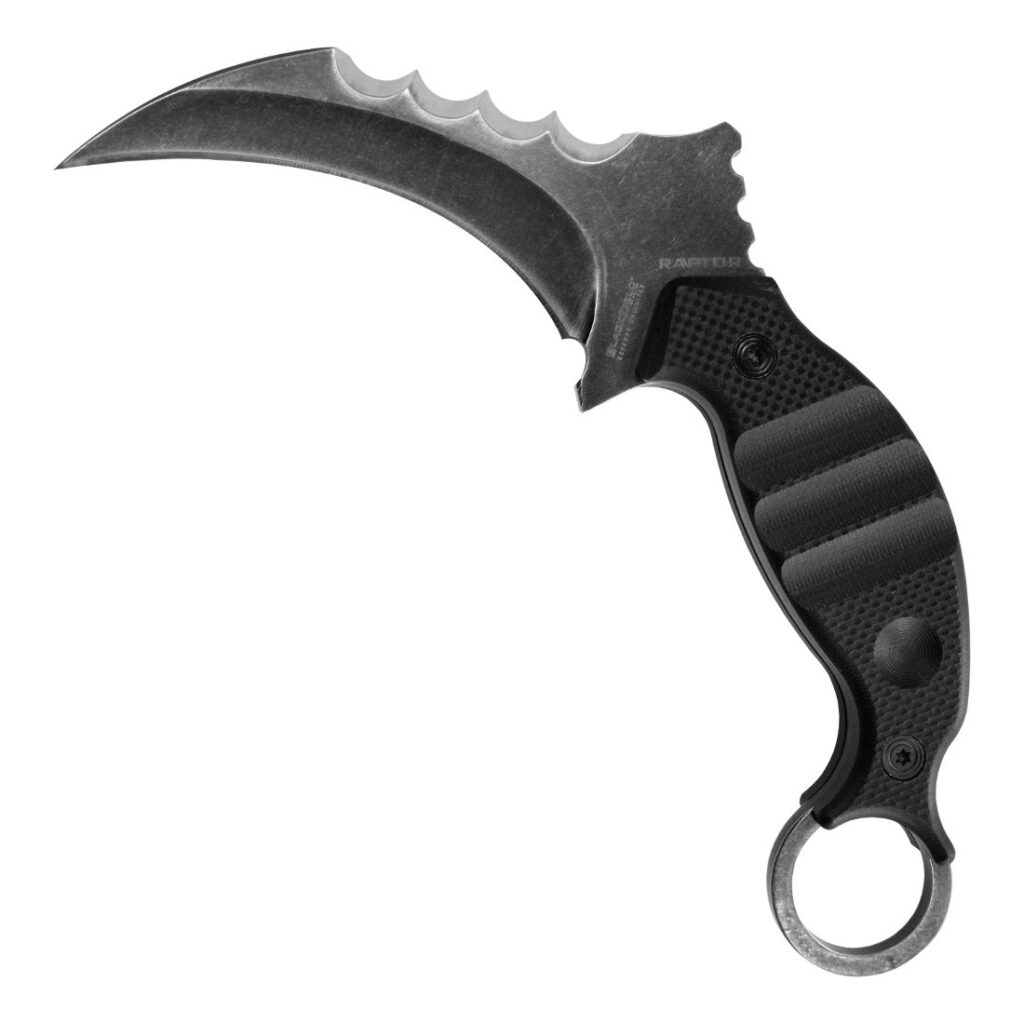
Definition: A karambit is a knife with a curved silhouette, inspired by Southeast Asia, recognizable by its claw-shaped blade and ring integrated into the handle. In the collection/decor world, it is above all a “signature” piece: highly visual, easy to display and immediately identifiable.
- Curved blade : it creates the “claw” effect that gives karambit its identity.
- Handle ring : emblematic detail, often at the heart of design.
- Compact size : easy to integrate into a display case, a collector's shelf or a setup (without taking up the space of a large decorative saber).
Karambit or kerambit? There are several spellings (including «kerambit»). Dictionaries and language resources such as Wiktionary mention these variants according to usage and borrowing.
Origins and symbolism: a design born in Southeast Asia
From everyday tool to iconic object
Karambit is generally associated with Indonesia and Malaysia. Historically, it may have been associated with everyday uses, and more broadly with the cultural traditions of the region. Some reference resources also mention its link with the world of pencak silat (silat), a group of martial arts from Southeast Asia (see, for example, popular articles such as Silat Culture).
The symbolism of the “claw” in the imagination
What spans the ages is the strength of its shape: a curve that instinctively evokes the claw, the feline, the agile. Without needing to go into technical details, it's easy to see why this design is so memorable: it has a very “narrative” visual identity, almost like a character accessory.
Why karambits are so fascinating to collectors (and pop culture fans)
A “signature” item in the window
A karambit, even on its own, is a real eye-catcher. Its curved lines are easy to read from a distance, and most of the finishes (black/red contrasts, steel effects, handle details) stand out strongly under window lighting. For a collection, it's typically a “centerpiece”: the one you point to when someone asks you to buy it. «what kind of model is this?»
Pop culture and gaming: a silhouette with a cult following
Beyond its origins, the karambit has gained modern notoriety thanks to its appearances in popular culture. In the game Counter-Strike, For example, it has become a particularly iconic knife in terms of aesthetics (community wikis dedicated to the series detail its in-game presence). As a result, many fans now associate the karambit with an “urban/gaming” imaginary, in the same way as other cult accessories.
Style variations: why we collect them all
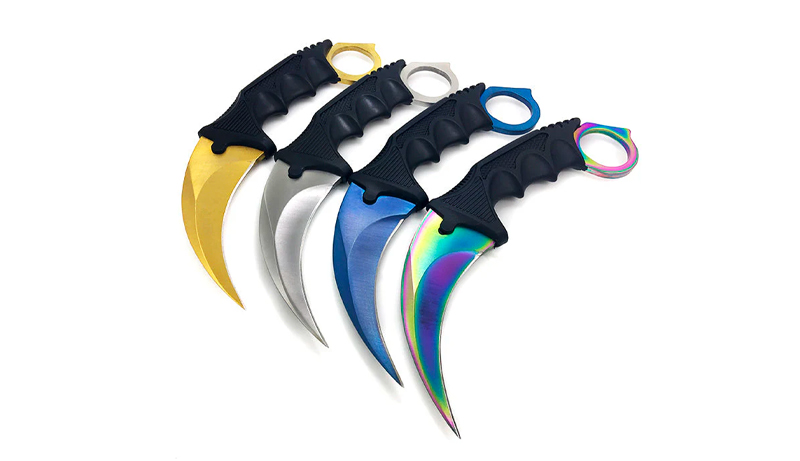
Two karambits can have the same “claw” and yet tell a totally different story: more or less pronounced curvature, discreet or very present ring, textured or smooth handle, sober or very contrasting finishes... This variety makes you want to put together a coherent selection, as you would with several replicas of the same family of objects.
The main styles of collectible karambits (quick reference)
To make your choice easier, here are some simple guidelines (designed for “collection” and atmosphere, not use):
- Traditional / historically inspired : more sober lines, a “heritage” feel, perfect on a shelf dedicated to Asian-inspired pieces.
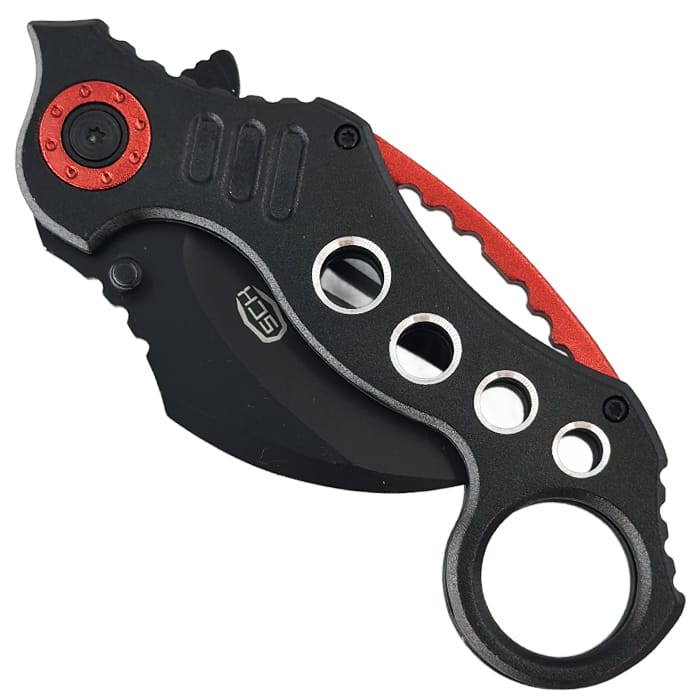
- Modern : Contrasting finishes, dark or colorful hues, urban / gaming vibe, very much at home in a contemporary geek decor.
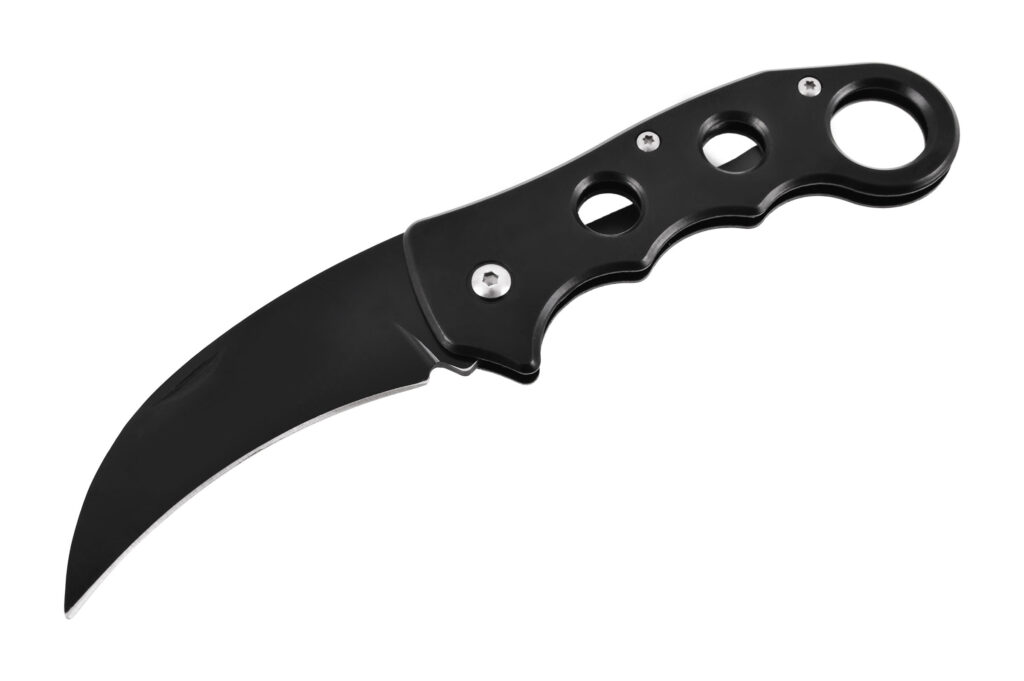
- Folding (design) vs. fixed (design) : The folding version often evokes a more “tech” aesthetic, while the fixed version lends itself well to display on a stand or in a showcase.
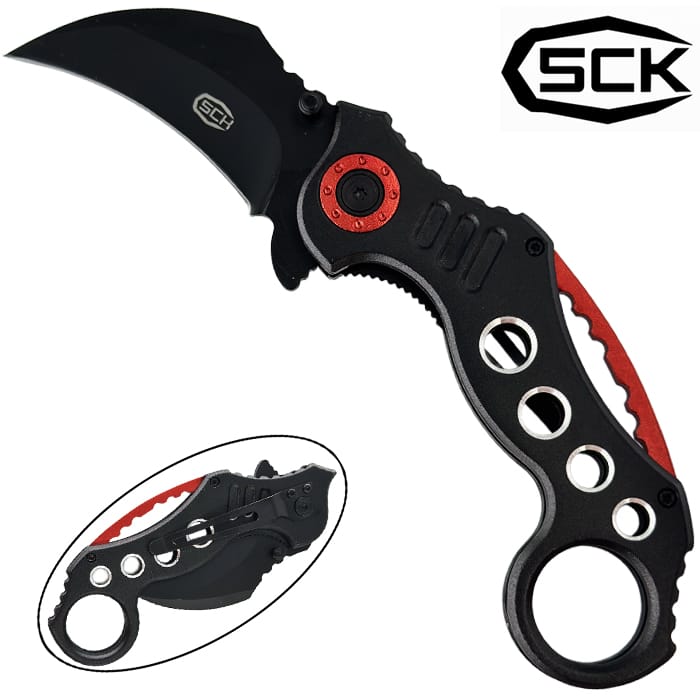
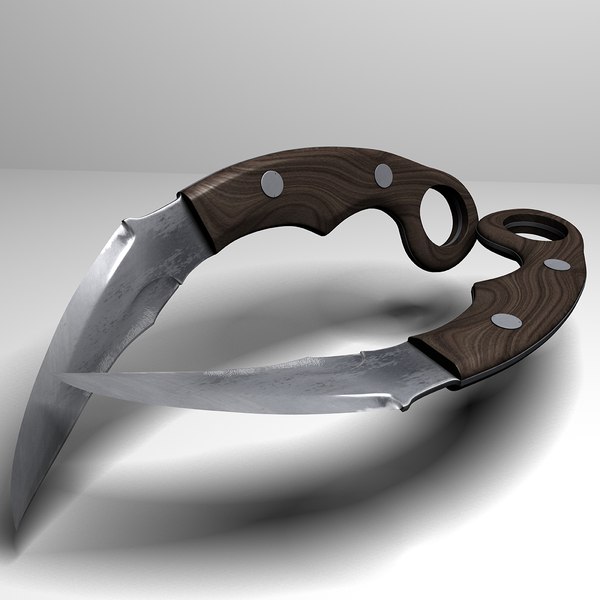
Style → decorating ambience (to project yourself)
- Sobriety in steel/black : minimalist showcase, manga library, premium collector's corner.
- Red/black contrast : gaming setup, neon decor, cyber/urban atmosphere.
- Very pronounced finish (textures, visual details): masterpiece on display, ideal as a gift.
How to choose a karambit for a collection (decoration, cosplay, gift)
Selection checklist (simple)
- Materials & rendering : metal often gives a more “collector's item” feel (weight, presence), while lighter materials can be sought for display or certain cosplays, depending on the context.
- Finish : colors, contrast, visible details (engravings, textures). The idea is to match the room to your universe (manga, film, fantasy, gaming).
- Proportions : a very pronounced curve reinforces the “claw” effect, while a softer curve can appear more sober.
- Accessories : case, stand, box... anything that facilitates a clean and reassuring presentation.
Please note: if you're collecting objects inspired by fictional universes, think about overall coherence (dominant colors, perceived materials, “antique” or “modern” style), just as you would for a display case of replica swords or daggers.
Exhibition ideas (fast and effective)
- Window display : set at an angle to highlight the curvature.
- Shadow frame“ (shadow box): superb for museum rendering, especially if you like compositions.
- Collector shelf: in front of mangas/figurines, the silhouette stands out immediately.
- Gaming setup : close to the PC (away from it, on a stable surface), with soft LED lighting to bring out the contours.
- Cosplay corner : presented with a mask, gloves or a matching accessory to create a mini-diorama.
Maintenance & storage (basic)
- If possible, handle with clean, dry hands: this reduces marks on the blade and handle.
- Wipe with a soft cloth after exposure or handling.
- Avoid prolonged exposure to humidity, and prefer clean storage (closed showcase, case, box).
- For any specific point, please refer to the manual for the part, if supplied, and comply with local regulations.
To easily compare styles and find the one that suits your world, you can browse our selection in the category Karambit knives. If you like contrasting designs, here's an example with a modern look:
FAQ: Frequently asked questions about karambit
Karambit or kerambit: which is the correct spelling?
Both forms exist in usage. «Karambit» is very common in French, while «kerambit» also appears, notably via English-language sources. Resources such as Wiktionary list these variants.
Why is karambit so popular in video games (e.g. Counter-Strike)?
Because her silhouette is instantly recognizable and “stylish” on screen. In Counter-Strike, It has become an iconic cosmetic item, contributing to its cult status in the gaming world (see the wikis dedicated to the series).
What's the difference between a karambit and other “iconic” collectible blades (kunai, butterfly knife)?
The karambit is best distinguished by its claw-like curvature and ring. A kunai is more reminiscent of the ninja world, with its simple, straight form, while a butterfly knife is iconic for its mechanism and symmetrical lines. In the shop window, they are three very different visual “signatures”.
How to display a karambit to enhance your figure?
Ideally, it should be placed at a slight angle (on a display), or in a shadow frame, with soft lighting. The curvature and the ring catch the light very well, quickly creating a “centerpiece” effect.
Conclusion: an iconic piece to display (and give as a gift)
If karambit is so fascinating, it's because it combines a instantly iconic shape, It has its roots in Southeast Asia and a second life in pop culture and gaming. As a collector's item, it's easy to stage and immediately adds character to a showcase, shelf or setup.
To discover other styles and compare finishes, you can explore all our karambits, or take a look at this contrasting model: Karambit modern red and black.