Roman Cavalry Spatha Sword
To begin with, the
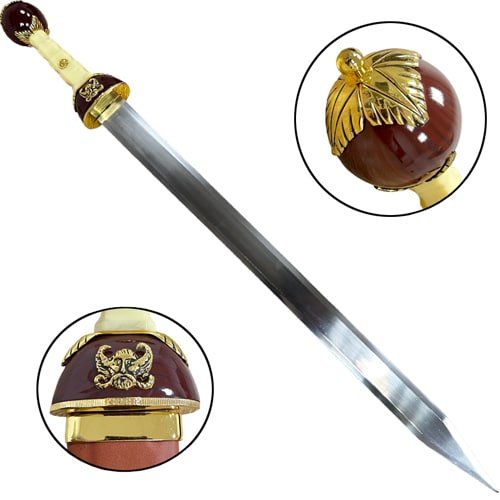
Roman Cavalry Spatha Sword is of Celtic origin. This type of Roman cavalry sword generally measures between 65 and 100 centimetres. In order to be used effectively by cavalry, it was later adopted by infantry. The exact measurement of the spatha is not known. It is characterized by a broad blade and a narrow guard.
The 2nd century AD was a time of great change. The short sword disappeared, to be replaced by a cavalry sword, a longer weapon known as the Spatha.
Used in northern Europe for several centuries after the fall of Rome, it was even used by the Vikings between 800 and 1100. In shape and size, the spatha is the evolutionary link between the Roman glaive and the medieval sword.
Your Spatha Roman Cavalry Sword at the best price.
We offer a wide selection of swords and glaives from the Antique period.
First and foremost,
That's why this is a great gift idea for all antique enthusiasts.
In conclusion, you can use the
Roman Cavalry Spatha Sword for your historical re-enactments or theme evenings. But above all, it's a collector's item.
How to maintain the blade of your antique sword?
Collector's and decorative swords are made and assembled in a simplified way. As their use is decorative, they lack the safety features required of a Japanese sword intended for training.
However, your
Roman Cavalry Spatha Sword to a steel blade that needs to be cared for to avoid damage over time. In fact, when you display your katana, your friends will be curious to see the blade and touch it. This is where you need to be careful, as the acidity of your fingers is very harmful to steel, whatever its quality.
However, if this happens, don't panic, just use a cloth dampened with a little oil and wipe off any fingerprints. If you do this, your sword will last a very long time.