






A replica assault rifle (in the sense of «an object inspired by a modern weapon») can be impressive—or, on the contrary, seem like a “toy” at first glance. And the secret isn’t just that it’s «made of metal»: its realism depends just as much on the proportions and the feel in the hand than on the quality of workmanship (painting, textures, details, adjustments).
This guide, designed for fans and collectors, helps you understand what the terms “metal” and “plastic” really mean, what makes the difference when displayed in a showcase or photographed, and how to choose an authentic-looking piece for display, display, or as a cosplay prop—without being mistaken for a real weapon.
Understanding the “realism” of a replica: what you feel and what you see
The realism of a replica depends on a few simple factors: consistent proportions, believable details, clean finishes, and how it feels in the hand (weight, balance, rigidity, and the “feel” of the surfaces). The material matters, but it isn’t everything.
To clarify, we can distinguish three main categories (without passing judgment—they’re just different uses):
- Decorative / inert replica : Designed for display, a collection, home decor, or a diorama.
- Airsoft replica : intended for supervised practice; the level of realism varies greatly depending on the range and materials used.
- Cosplay prop / accessory : Priority is given to the on-screen (or on-stage) visual experience and comfort, and these are often lighter.
Regardless of the type, Materials determine the foundation (weight, stiffness, durability) and The finishing touches add to the realism (metal finish, patina, sharp details).
Materials: Advantages, Limitations, and How They Look in a Collection

Metals: steel, aluminum, alloys… what difference do they really make?
When a replica is described as “metal,” this can refer to several different materials: steel, aluminum, or various alloys. In practice, this generally means:
- A “denser” feel and a cooler texture, often perceived as more realistic.
- It generally makes a more convincing impression on display, especially on a long piece.
- Good definition of edges, corners, and certain textures (depending on the quality of workmanship).
On the other hand, “metal” doesn’t automatically guarantee a perfect finish: paint that’s too glossy, loose fittings, or simplified details can ruin the illusion. That’s why it’s important to look at the description and detailed photos rather than just the word itself.
Polymers: ABS, nylon, and composites
High-quality “plastics”—often described as polymers, ABS, nylon, or composites, depending on the manufacturer—can produce a very professional-looking finish, especially on modern designs. Their strengths include:
- Lightweight—great for cosplay, photography, or extended shoots.
- Resistance to minor everyday wear and tear (light impacts, handling).
- Fine details when the modeling is done well, with realistic textures.
The difference then comes down to the quality of the molding (flash, parting lines) and the surface finish.
Resin and prop materials: fine details and cinematic quality
In the world of accessories and props (cosplay, film production, exhibitions), we also come across pieces made of resin or resin-based materials. When worked properly, resin allows for an excellent level of detail and a very convincing visual result, especially after priming and painting—an approach often highlighted in prop-making resources such as Punished Props.
The trade-off is a classic one: depending on the design (thickness, reinforcements, solid or hollow parts), the resin may be more susceptible to breakage or certain types of impact. For a display case, it’s generally an excellent choice; for an item that’s handled frequently, it’s best to opt for a sturdy design.
Microsynthesis: Which Material for Which Application?
- Display / decor: metal/alloys or metal-polymer composites, for texture and visual impact.
- Cosplay / convention / photography: high-quality polymers or props, for comfort and ease of wear.
- “Collector's” gift: Focus on the finish (paint, details, presentation) rather than just the material itself.
What Sets It Apart: Finishes, Details, and Moving Parts
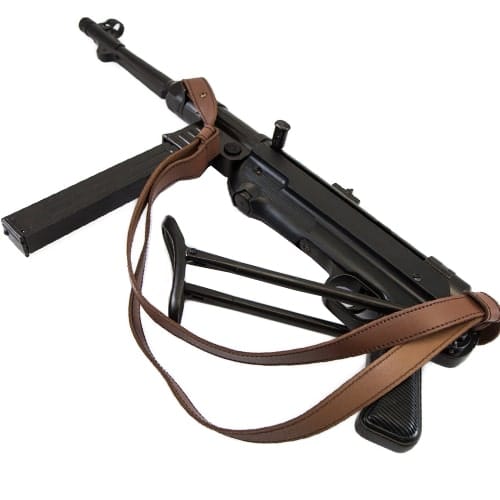
Visual finishes: paint, metallic finish, uniformity
A replica can look realistic thanks to well-balanced paintwork (matte, satin, textured effects), consistent contrasts, and a clean surface. Conversely, a look that’s too “plastic,” too shiny, or an uneven color immediately stands out.
A slight patina (if present) can enhance the “collectible” or “film prop” look, but it’s not a requirement: a piece with a modern look can be perfectly believable with a clean, uniform finish.
Manufacturing details: textures, engravings, adjustments
What sets a beautiful collectible apart is often found in the details:
- Clean, burr-free textures (handle, handguard, grooved surfaces).
- Clean edges and lines, with no overly visible mold marks.
- Fits: minimal “play” between parts; consistent alignment.
- Decorative elements: fasteners, rails, clean markings/engravings (not necessarily official).
“Collection” Installation: Moving Parts and Immersion
Without getting into inappropriate uses, some replicas feature purely decorative moving parts (such as a removable dummy magazine, external controls, or levers). For a collector, these are little extras that enhance the immersive experience, especially during an exhibition or a photo shoot.
Checklist: How to Evaluate a Realistic Replica Before Buying
- Proportions and scale: The overall silhouette must “look just right” (neither too bulky nor too slender).
- Weight and balance: A consistent feel immediately enhances credibility.
- Clear details: no (or very few) smudges, clean lines, and distinct textures.
- Even paint application: no visible drips, controlled gloss, and a realistic texture.
- Part fit: proper alignment, minimal play, clean assembly.
- Helpful photos: Take photos from multiple angles and zoom in on key areas (seams, textures, surfaces).
- Clear description: listed materials, intended use (decoration/props), and whether any display accessories are included.
Common Mistakes to Avoid : relying solely on the word “metal,” confusing a lightweight replica intended for cosplay with “poor quality,” or ignoring the scale (a beautiful object may look “fake” if it isn’t the right size).
Exhibits, Transportation, and Landmarks in France: Collecting Responsibly

Simple Tips for a Display (or Decor) That Showcases the Room
- Display stand or holder: A stable holder prevents minor impacts and highlights the garment's silhouette.
- Avoid moisture: An environment that is too humid can cause certain finishes to become marked over time.
- Gentle dusting: microfiber cloth, without harsh cleaning products (especially on paint).
- Lighting: Soft or indirect light brings out textures without “blowing out” the details.
Key Figures in France (Management Reminder) : even when inert, an object resembling a firearm calls for caution to avoid any confusion. The general framework is addressed, in particular, by Légifrance (Decree No. 99-240 of March 24, 1999) and on the information page for’entreprises.gouv.fr regarding gun regulations. In practice, opt for a private viewing, avoid handling the item in public, and transport it discreetly and securely (in a case or a closed container), in accordance with applicable regulations and the seller’s instructions.
Where can you find realistic replicas for your collection and home decor?

At Réplique Manga Ciné, our goal is to help you find pieces that “work” as collectibles: beautiful to look at, satisfying to hold, and easy to incorporate into an enthusiast’s space (gaming corner, movie shelf, display case for cult items).
- Replica Sten MK2 : a piece with a historical style, prized by collectors for its look and presence.
- Replicas of modern assault rifles : to explore more contemporary designs, which are often sought after for “video game/movie”-themed decor.
FAQ: Materials, Realism, and Precautions
What is the difference between a metal replica and a polymer replica in terms of realism?
Metal often provides a more convincing feel (weight, texture, rigidity). However, a high-quality polymer can be very realistic visually: it all depends on the molding, the textures, and, above all, the finishes (paint, adjustments).
“What does ”full metal” mean on a replica (and why should you check the description)?
“Full metal” is a flexible term: it can refer to a majority of external parts being made of metal, or just certain parts. The best approach is to check the detailed description (which areas are made of metal, which are made of polymer) and look at the close-up photos.
How can you display a replica elegantly and protect it over time?
Use a stable surface, avoid moisture, gently dust with a microfiber cloth, and use soft lighting. A closed display case also helps keep dust out and reduces micro-scratches caused by handling.
What precautions should you take in France if you have an object that looks like a firearm?
Even if it is decorative, this type of item must be handled with care: avoid public spaces, transport it discreetly (in a closed cover or container), and refer to official documents and websites (notably Légifrance and entreprises.gouv.fr) as well as the information provided by the seller.