It's already Christmas at RMC: 10% discount on non-promotional products With the code: NOEL25

Katana Art: Discover how it's made

The art of the Japanese katana

First of all, welcome to this blog article "The Art of the Katana: Discovering how it's made". We're going to explain how to forge a katana step by step. First, a little history.

The making of a katana, an ancestral Japanese art that testifies to the excellence and expertise of Japanese blacksmiths. This art, known as "Tōshō" (sword smithing), dates back to the end of the first millennium. It has evolved over the centuries. Incorporating refined techniques to create weapons that are not only functional, but also true works of art.

The history and evolution of the katana are therefore deeply rooted in the cultural and social history of Japan. The katana, as we know it today, has evolved through centuries of technical and artistic refinement. It is therefore closely linked to the military needs and aesthetics of the time.

1. The Art of the Katana: Origins and evolution

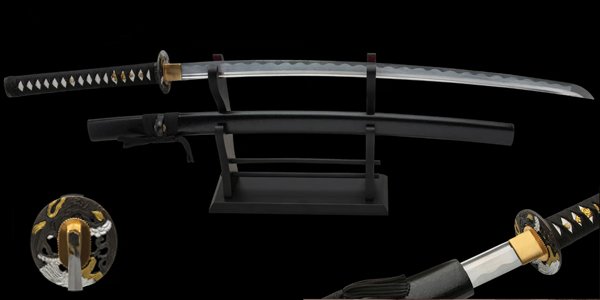
Forged katana, the art of the katana
  1. Heian period (794-1185) : During this period, Japanese swords, mainly straight and called "tsurugi" or "chokutō". These weapons were used by the nobility and emerging warrior classes.
  2. Kamakura period (1185-1333) The katana really began to develop during this period. Japanese warriors began to favor a curved blade, more suited to mounted combat and capable of cutting more effectively.
  3. Muromachi period (1336-1573) The katana, established as an essential weapon for samurai. The swords of this period, shorter and more curved than their predecessors, optimized for fast, short-range combat.
  4. Edo period (1603-1868) With the unification of Japan under the Tokugawa shogunate and the beginning of a period of relative peace. The katana also acquired a more symbolic and ritualistic dimension. It was during this era that the art of katana-making reached its apogee. Indeed, with great attention paid to the aesthetic beauty of the blade, in addition to its functionality. Blacksmiths of this period created some of the finest katanas, now considered national treasures.

2. Tamahagane Steel and Composite Steel Creation

Tamahagane literally means "precious steel" in Japanese. The traditional material used to make katana blades. This type of steel is known for its purity and ability to be hardened, two essential qualities for an effective, long-lasting katana blade. Then comes the crucial step of transforming the steel into a composite. In order to increase the blade's strength and efficiency.

This traditional method involves combining different types of steel. Take the example of Kobuse forgingThis technique involves a core of mild steel, wrapped in a layer of hard steel. This method is often used for high-quality blades. Allows high resilience with exceptional sharpness.

There is also the sanmai forgingwhere a layer of hard steel is sandwiched between two layers of softer steel. This sandwich structure is then heated, forged and bent together. Ensuring that the properties of each type of steel manifest themselves in different parts of the blade. The hard core provides a durable cutting edge. While the softer exterior gives the blade greater flexibility and strength.

3. The Art of the Katana: Manufacturing techniques

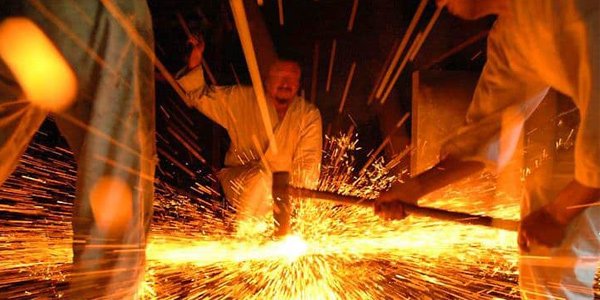
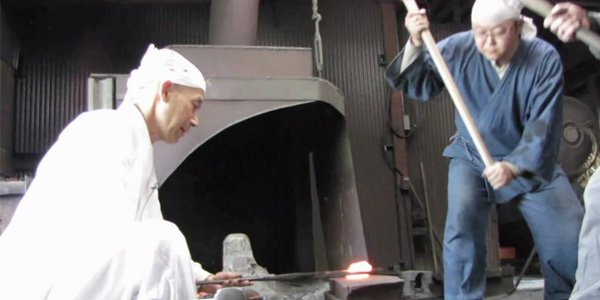
The art-of-katana-technique-of-manufacturing

Once the steel has been created, the blacksmith begins the process of bending and forging the blade. This involves folding the steel several times over to strengthen its structure and remove impurities. This process also creates unique patterns on the blade, which are highly prized by collectors.

The tempering process, or hamon, is a particularly crucial feature. Here's how it works:

  1. Clay application: Before tempering, the blacksmith applies a layer of clay to the blade. This layer is thicker on the back of the blade and thinner on the cutting edge. The clay acts as a thermal insulator, slowing the rate of cooling of the covered parts.
  2. Soaking : The blade is then heated to a high temperature and immersed in water or sometimes oil. Areas without clay or with a thin layer of clay (the cutting edge) cool very quickly, hardening the steel. On the other hand, areas covered by a thicker layer of clay (the back) cool more slowly and remain relatively softer and more ductile.

In conclusion, as you can see, owning a forged katana embody the very essence of Japanese craftsmanship, combining tradition and technical mastery. At Réplique Manga Ciné, we are proud to offer an exceptional selection of forged katanas from the brand Fudoshin.

4. The parts of the katana

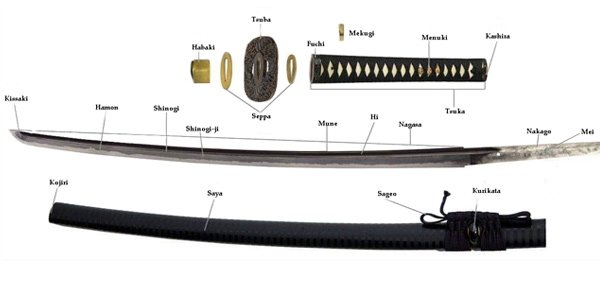
Sketch of all katana parts

Composed of several distinct parts, each with its own role and importance in the overall structure of the sword. Each of the parts named below plays an essential role in the katana's functionality, but also in its aesthetics. 

  1. Visit blade and hamon and the tip of the blade is called Kissaki.
  2. Visit TsubaThe guard of the katana, located at the base of the blade. Often richly decorated, it also serves as a counterweight. The Seppa, washers that fit on both sides of the tsuba to ensure a tight fit of all parts.
  3. TsukaThe handle of the katana is covered with ray skin (same) and wrapped with a cord (ito). Beneath the cotton braid is the MenukiA small sculpture to embellish the handle. The Fuchi collar that reinforces the handle where it meets the guard. KashiraThe cap at the end of the handle acts as a counterweight and reinforcement. Mekugibamboo pegs through the handle and tang to secure the whole.
  4. Saya or sheath, in which the katana is stored when not in use. Traditionally made of wood and lacquered to protect the sword.
  5. Nakago (tang) part of the blade that extends into the handle. It often bears the blacksmith's signature, crucial to the katana's balance and structural solidity.
Notify me when the product is available We will inform you when the product is in stock. Please enter your e-mail address below.