


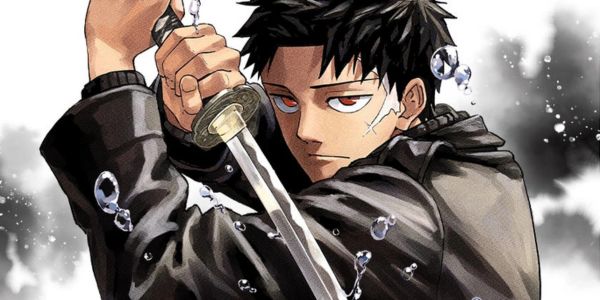
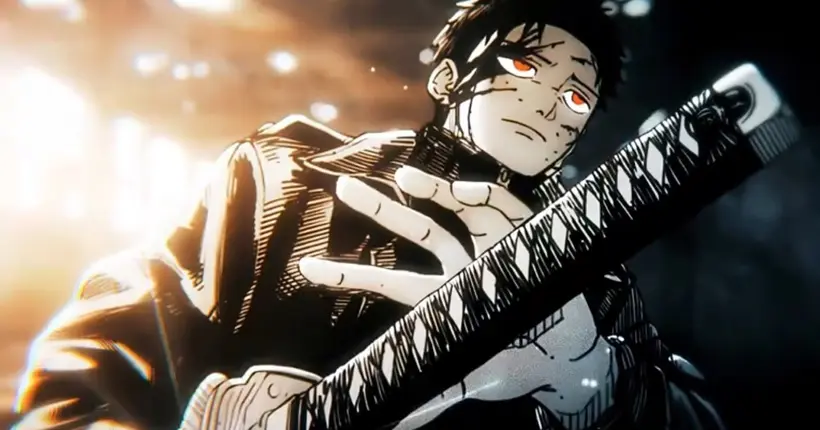
As soon as Kagurabachi, the katana Enten attracts attention for its visual presence and its importance in Chihiro Rokuhira's journey. Forged by Kunishige Rokuhira, the protagonist's father, this blade belongs to the seven enchanted blades linked to past events in the manga universe. After the tragedy that befalls his family, Enten becomes a tangible legacy... and the story's emotional thread.
If you're looking for a clear explanation (without having to scour pages of wiki), here's the gist: where Enten comes from, what she means to Chihiro, and what her best-known techniques correspond to.
Enten in brief: what you need to know (spoiler-free)
Enten (sometimes noted 淵天 in Japanese presentations of the work) is a enchanted blade passed on to Chihiro Rokuhira. It is central to the story because it links the hero directly to Kunishige, his blacksmith father, and embodies a promise: to ensure that this power is not misused.
Why it matters so much Enten is not just «the main character's weapon». It's an object of heritage, a symbol of mourning and justice, and a recognizable aesthetic signature thanks to a recurring motif: fish.
Fans“ benchmarks” Enten is associated with techniques called Kuro, Aka and Nishiki, These are often represented by fish (especially goldfish) that visually accompany the activation of the blade.
Mini-glossaire a enchanted blade is a sword with supernatural properties in the universe of Kagurabachi. Le Datenseki designates a particular mineral mentioned in the manga, linked to the creation of these blades.
The origin of Enten: Kunishige's forge and Chihiro's legacy
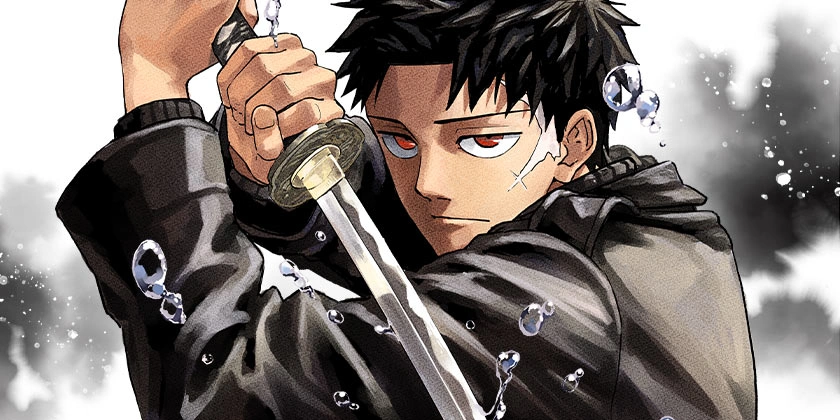
A special blade among enchanted blades
In the story, the enchanted blades are surrounded by a special aura: they have left their mark on the history of the world of Kagurabachi and are bound to arouse envy. Enten, on the other hand, has a singular place: she remains associated with the Rokuhira lineage and the father-son relationship, rather than a simple show of strength.
This is an important point in understanding why Enten speaks so much to readers: she is remembered not just for what she “does”, but for what she “means”.
Datenseki: the key element (explained simply)
Enten is linked to Datenseki, a special mineral mentioned in the story as a key resource in the creation of enchanted blades. You don't need to know much more to appreciate the essential: the Datenseki serves above all to understand that Enten's forge is not a simple craft, but a rare, demanding and high-stakes job.
In the official descriptions of the series (especially the official website Kagurabachi and the synopsis of volume 1 at VIZ), the idea of inheritance and transmission is emphasized: Enten is part of this continuity, as the object that materializes all that Kunishige has left to Chihiro.
What the blade means to Chihiro
For Chihiro, Enten is a physical link with his missing father, but also a constant reminder of what he must protect. The katana then becomes a landmark: a piece that stabilizes the character, helps him move forward, and gives concrete form to his quest for justice.
And this is precisely why fans are so attached to the object: Enten isn't “just a stylish katana”, it's a symbol that can be understood even without dissecting each chapter.
Enten's techniques: Kuro, Aka, Nishiki (what changes in the story)
What makes Enten immediately recognizable are its visual manifestations and named techniques. In the universe, they are often expressed through fish that appear around the blade, as if the energy of the enchantment were taking on a “living” form.
- Kuro (black): a technique associated with a sharp, visually striking slash, often cited as the most direct expression of Enten's power.
- Aka (red): an ability designed around the idea of absorbing and repelling a threat, giving Enten a more “reactive” side than a purely attack-oriented one.
- Nishiki (multicolor): an enhancement that acts on the wearer himself, with a sensation of acceleration and reinforcement, staged in a very dynamic way.
In plain English These techniques don't just serve to vary the confrontations. They define a visual grammar specific to Kagurabachi. A reader remembers Enten because she has a language (colors, fish, names), not just because she “wins”.
Why Enten has become iconic: design, symbolism... and collecting pleasure
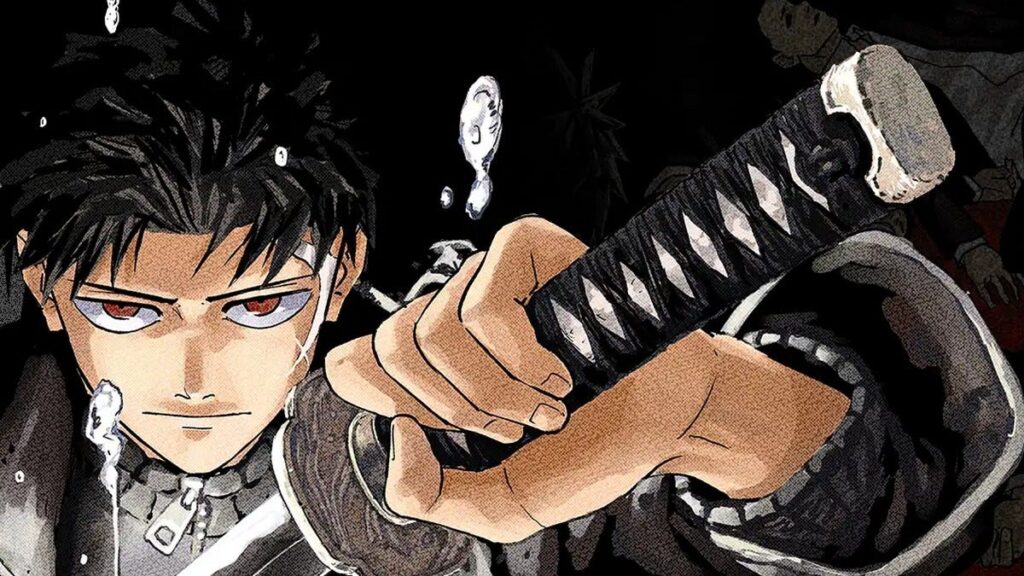
A strong visual identity: sobriety, contrast, fish
Enten is distinguished by a rather sober aesthetic: a dark blade, a streamlined silhouette, an ensemble that relies on contrast rather than ornament. This simplicity brings out the visual effects of fish all the more: the katana remains legible to the eye, and enchantment becomes the “signature” that animates it.
On the subject of fish, several pop culture media have relayed explanations of this graphic choice (e.g. ComicBook.com). Without over-interpreting, one thing is clear: the motif is strong enough to become an immediate marker for the series, in the same way as an emblem or a dominant color in other licenses.
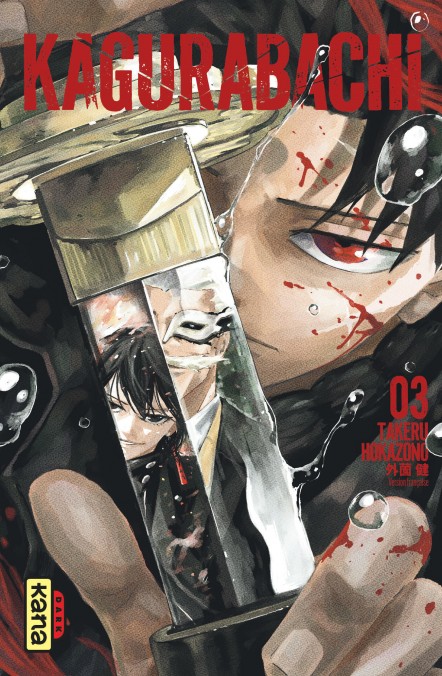
What fans like to display: geek deco, showcase, cosplay
Because Enten is both legible and symbolic, it works very well as a display object. In a manga showcase, a “geek” office corner, or a room dedicated to collecting, it's typically the kind of sword that tells something, even to someone unfamiliar with the series: a dark aesthetic, a mystery, a visual signature.
For cosplay, the appeal is similar: it's recognizable without being overloaded, which facilitates consistent rendering in photos and on stage (conventions, shoots), while remaining elegant.
Transition collection (no catalog): find a replica inspired by Kagurabachi
If you also like Enten as an object, the ideal is to aim for a replica designed for decoration and display: a faithful rendering of the general lines, visual coherence between blade and scabbard (saya), and clean finishes on the guard (tsuba) and handle.
You can find a replica of Chihiro's Katana Enten on RMC, as well as a wider selection in the Metal Katana Kagurabachi. The idea is not to “replace” the work, but to extend the universe in your own home, with a room that lends itself to staging.
Display and maintenance: keeping your replica in top condition
For further information, you can also consult our guide : how to care for your katana.
- Exhibit A wall bracket, a horizontal rack or a display case can highlight Enten's dark line. If you like contrasts, a light background or soft (non-aggressive) lighting helps to bring out the reflections.
- Avoid These include humidity and temperature variations, as well as fingerprints left on a metal part for too long (which can leave a visual mark over time).
- Clean A soft, clean, dry cloth is usually all that's needed to remove dust and micro-traces. A simple, regular routine is often more effective than “intensive” maintenance.
Properly displayed and maintained, an Enten replica becomes a “telling” piece.” Kagurabachi heritage, mastery, and the visual poetry of the fish, which contrasts with the austerity of the sword.
Conclusion By understanding Enten's origins, her techniques (Kuro, Aka, Nishiki) and what she means to Chihiro, you can see why this katana has become one of the emblems of Chihiro. Kagurabachi, The result is a collection that's as much a pleasure to read as it is to display.
FAQ
Enten, what exactly is Kagurabachi?
Enten is a enchanted blade portrayed by Chihiro Rokuhira. She is at the heart of the story, linking the hero directly to his father, Kunishige, and embodying the story's dimension of heritage and justice.
Who forged Enten and why is this blade so important to Chihiro?
Enten was forged by Kunishige Rokuhira. For Chihiro, she represents both a concrete memory and a responsibility: to preserve this legacy and prevent the enchanted blades from being misused.
What are Kuro, Aka and Nishiki?
These are techniques associated with Enten. Kuro refers to a particularly striking notch, Aka to an absorption/return logic, and Nishiki an improvement focused on the wearer. They also serve to give the katana a highly recognizable visual identity.
Why are fish associated with Enten?
Fish (often goldfish) are a visual motif linked to Enten's activation and techniques. They act as a graphic “signature”: the blade is immediately identified by this aquatic presence, both beautiful and strange.