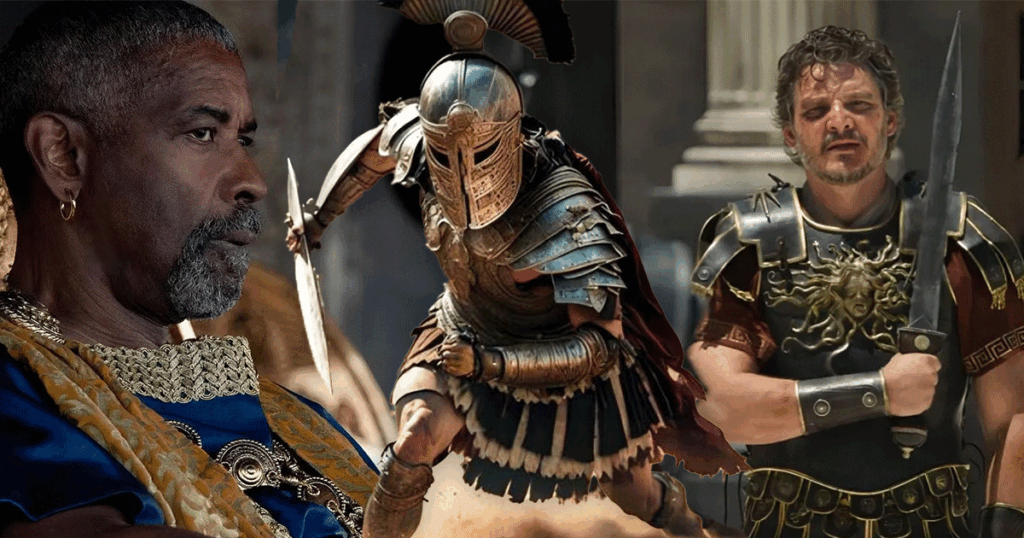
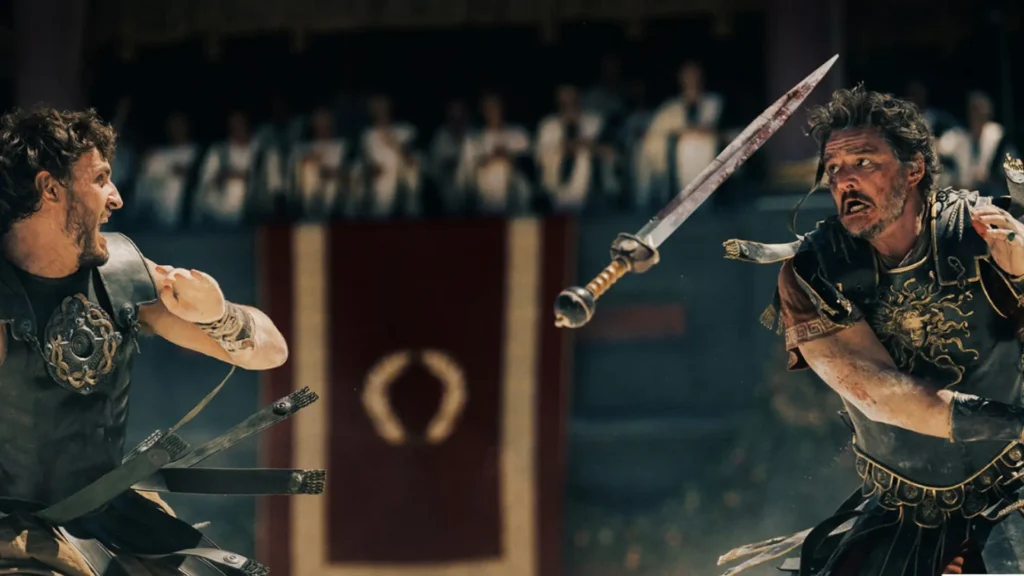
To begin with, the film Gladiator 2, directed by Ridley Scotthits cinemas on November 13, 2024. It draws on characters and events from Roman history, while integrating elements of fiction to captivate audiences. For example, the emperors Caracalla and Geta actually existed and ruled Rome after the death of Marcus Aurelius. Caracalla is infamous for having his brother Geta assassinated so that he could rule alone. The film dramatizes this power struggle by accentuating their tyranny.
However, the complex family relationships between these characters and Lucius Verus are invented for the purposes of the script. The Roman Empire, as depicted in Gladiator 2, captures the brutal spirit of the era. But the film takes liberties by exaggerating certain situations to create a more intense narrative. The film promises epic battle scenes, including an arena confrontation where Lucius battles a rhinoceros. The trailer, released in July 2024, hints at a grand spectacle in the tradition of Ridley Scott's epic films.
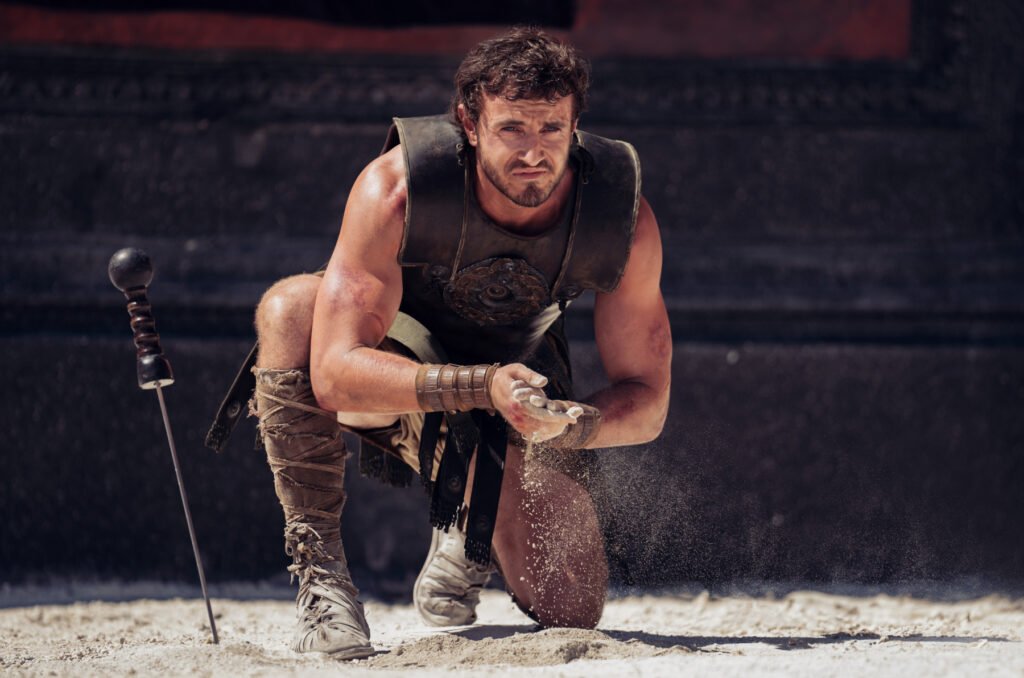
First of all, gladiators, as portrayed in the film, are indeed fighters. Often captured as slaves or criminals, they are trained to fight in the arena. However, the way they are portrayed in Gladiator 2 includes elements of fiction. In real life, becoming a gladiator is not a heroic choice but a punishment or a way to survive.
Gladiatorial games were often popular in ancient Rome. And fighters can sometimes win their freedom after several victories, as the film suggests. However, spectacular scenes such as fighting a rhinoceros or massive battles are rare. The film amplifies moments of violence for the viewer's pleasure. If the sword weapon is historically accurate. Duels are often much simpler than what we see on screen.
First and foremost, the sword, the emblematic weapon of Roman legionaries. It plays a central role in the depiction of gladiators in films such as Gladiator 2.
Historically, the glaive was a short sword, wielded with a precise technique that favored effective thrusts. The Roman swords you'll find on our website are faithful replicas of this ancient weapon, as illustrated by the replica of the Julius Caesar's sword. There is also the Fulham Roman sword and much, much more! These replicas are not only collectors' items, but also a way of getting closer to a fascinating era.
Ridley Scott was careful to reproduce this aspect of Roman military life with authenticity. Showing the brutal effectiveness of this weapon on the battlefield and in the arena. In the film, the sword becomes a symbol of power and survival. Sometimes exaggerating its role to reinforce the sense of domination and strength that these gladiators had to embody.
The Colosseum, a major symbol of Rome, is magnificently recreated in Gladiator 2. This historic monument is truly the stage for bloody spectacles, where gladiators clash before the eyes of a thrill-seeking crowd. The Colosseum is an engineering feat of its time. Constructed of concrete, travertine stone and marble. It is 189 metres long, 156 metres wide and 50 metres high. Organized on four levels, with tiers arranged to maximize visibility for all spectators. Whether wealthy senators or ordinary citizens. The arena floor, known as the hypogeum, was made up of complex underground passages where gladiators prepared.
However, some aspects of the games shown in the film, such as naval battles or fights against exotic animals like rhinoceroses, are exaggerations designed to heighten the drama. Although fights between animals and gladiators did indeed take place. The extravagant action scenes in Gladiator 2 remain in the realm of fiction. Nevertheless, the film correctly illustrates how games were used to consolidate the power of emperors and manipulate public opinion.
Finally, the character of Lucius Verus, hero of Gladiator 2, a blend of fiction and reality. In the film, Lucius is the nephew of Commodus and is inspired by the actions of Maximus to fight against the tyranny of Rome. Historically, Lucius Verus did exist, but he had no connection with Commodus or Maximus. This cinematic invention extends the epic story of the first film, while bringing a new generation of heroes to the screen.
In conclusion, this blend of fact and fiction anchors the film in a historical context, while allowing the director to develop a heroic and spectacular plot. It's a good example of how cinema uses history as a starting point to create captivating narratives.

To provide the best experiences, we and our partners use technologies like cookies to store and/or access device information. Consenting to these technologies will allow us and our partners to process personal data such as browsing behavior or unique IDs on this site and show (non-) personalized ads. Not consenting or withdrawing consent, may adversely affect certain features and functions.
Click below to consent to the above or make granular choices. Your choices will be applied to this site only. You can change your settings at any time, including withdrawing your consent, by using the toggles on the Cookie Policy, or by clicking on the manage consent button at the bottom of the screen.