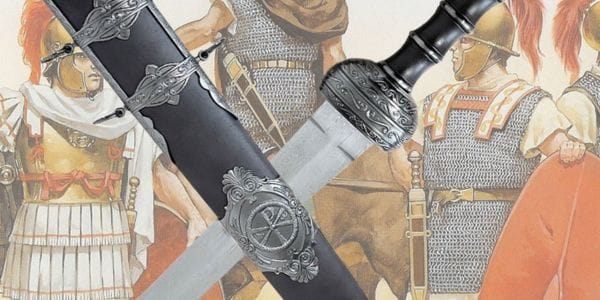
Visit Roman swordor gladiusis one of the most famous weapons in military history. A symbol of Rome's power and the discipline of its legionaries, it enabled the Empire to expand across three continents. But beyond its effectiveness in combat, the sword is also a fascinating piece for lovers of history, military strategy and fine antique weapons.
In this article, we take a closer look at what this weapon is all about., its origin, structure and use in the Roman army... and present some of the magnificent replicas available to collectors and re-enactors.
The word sword comes from the Latin gladiuswhich gave its name to the short weapon used by Roman soldiers. Contrary to popular belief, this sword was not invented by the Romans themselves. They were inspired by the weapons of the warriors Iberian (modern-day Spain), particularly after the Punic Wars against Carthage.
Visit gladius hispaniensisThe oldest version of the glaive is therefore a weapon of foreign origin. But once adopted by the legions, it was perfected, shortened, balanced... until it became the glaive as we know it.
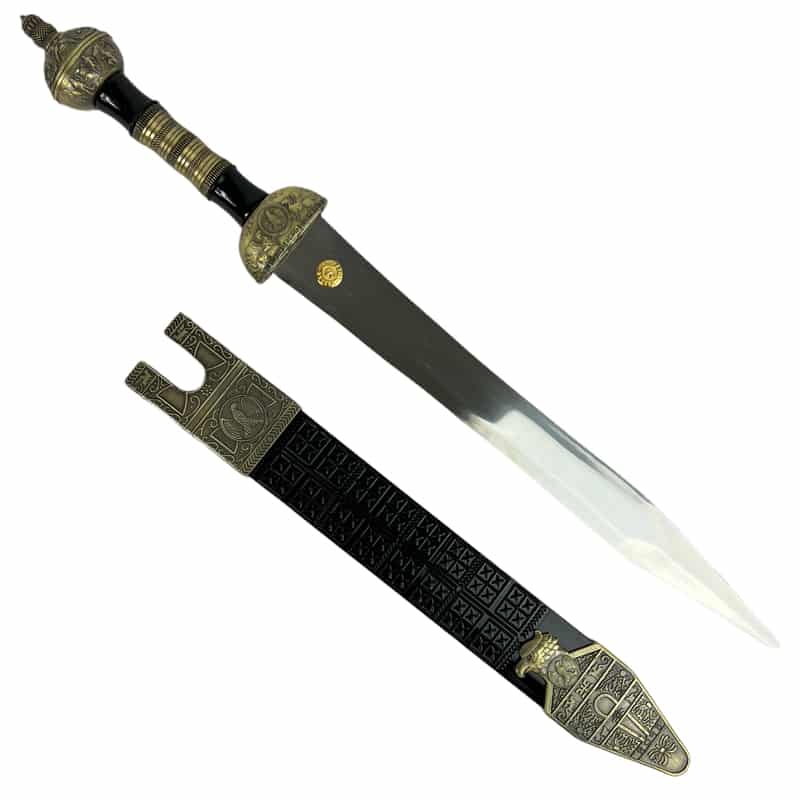
This sword is a short weapon, often of 50 to 70 cmdesigned for use in close combat. Unlike long swords designed to strike at a distance, the glaive is designed to pierce, pierce the armor and strike fast.
It generally consists of :
It's a weapon of discipline and rigorperfectly suited to the famous shield wall (testudo), where each Roman soldier had a limited space in which to fight.
The effectiveness of the sword lies in its association with extremely well-oiled military tactics. The Roman legionary used his scutum (large shield) to protect himself and block the enemy, then launched a swift attack with his sword to strike under the opponent's shield, or through armor openings.
This type of combat was fast, precise, lethal. This was not a theatrical dance, as in medieval duels, but a mechanic of war. The sword is therefore a pragmatic tool, designed for efficiency on the battlefield.
The various historical models include :
Each varies in shape and length according to period and region.
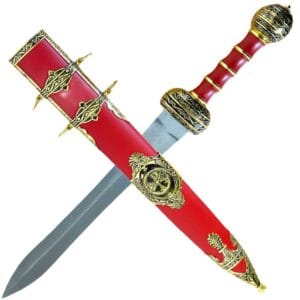
If you're a fan of ancient history or historical re-enactment, today you can treat yourself to a faithful replica of roman swordas beautiful as it is realistic. Here are three models not to be missed:
These swords are made from noble materials and are perfect for collectors, historical cosplay enthusiasts, or simply as a decorative piece in an antique-themed interior.
For more models, explore the complete collection of antique swords and glaives.
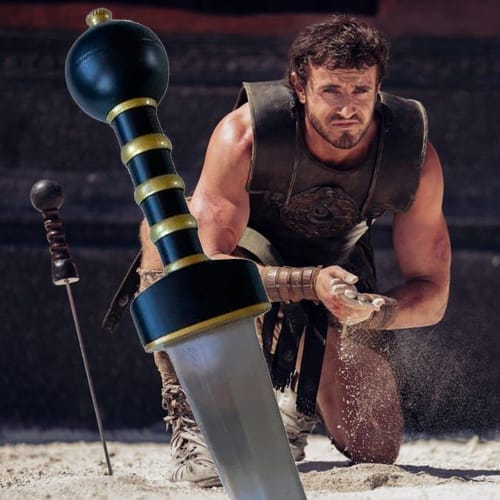
This weapon has greatly inspired literature, cinema and video games. It can be found in such iconic works as :
Its short, symbolic design, often adorned in red and gold, immediately evokes the image of the Roman legionary. It is also associated with the figure of Julius Caesarone of Rome's most emblematic military leaders, often depicted with a gladius sword on his belt.
In the arts, the sword is also a symbol of justice and power. It represents authority, but also discipline - two pillars of Roman culture.
Visit Roman sword was not just a weapon. It was an extension of Roman military strategy, organization and combat philosophy. Handled with rigor, used in training, and designed to last, it symbolized the efficiency and domination of the Roman army over the ancient world.
Today, it continues to fascinate. By its shape, its historical significance, its symbolism. To own a replica is to own a fragment of that history, an echo of Roman grandeur.
And if you'd like to display it in your home, swords available on RepliqueMangacine.fr are there to take you back in time.

To provide the best experiences, we and our partners use technologies like cookies to store and/or access device information. Consenting to these technologies will allow us and our partners to process personal data such as browsing behavior or unique IDs on this site and show (non-) personalized ads. Not consenting or withdrawing consent, may adversely affect certain features and functions.
Click below to consent to the above or make granular choices. Your choices will be applied to this site only. You can change your settings at any time, including withdrawing your consent, by using the toggles on the Cookie Policy, or by clicking on the manage consent button at the bottom of the screen.