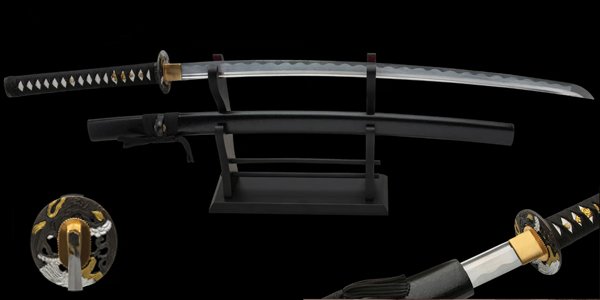
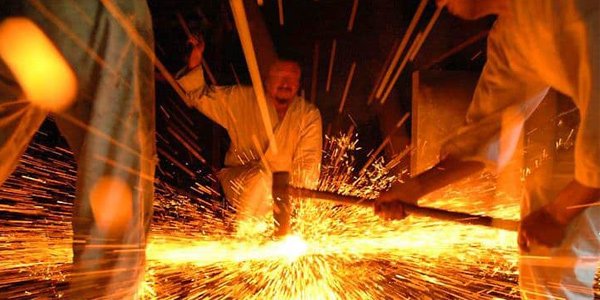
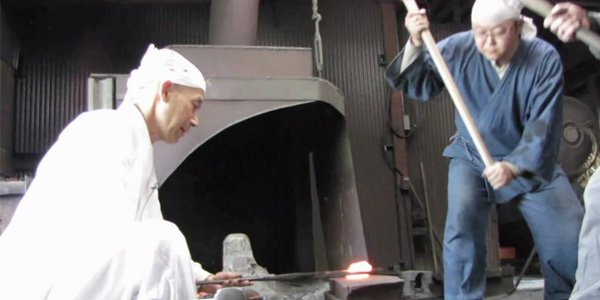
First of all, welcome to this blog article "The Art of the Katana: Discovering how it's made". We're going to explain how to forge a katana step by step. First, a little history.
The making of a katana, an ancestral Japanese art that testifies to the excellence and expertise of Japanese blacksmiths. This art, known as "Tōshō" (sword smithing), dates back to the end of the first millennium. It has evolved over the centuries. Incorporating refined techniques to create weapons that are not only functional, but also true works of art.
The history and evolution of the katana are therefore deeply rooted in the cultural and social history of Japan. The katana, as we know it today, has evolved through centuries of technical and artistic refinement. It is therefore closely linked to the military needs and aesthetics of the time.
Tamahagane literally means "precious steel" in Japanese. The traditional material used to make katana blades. This type of steel is known for its purity and ability to be hardened, two essential qualities for an effective, long-lasting katana blade. Then comes the crucial step of transforming the steel into a composite. In order to increase the blade's strength and efficiency.
This traditional method involves combining different types of steel. Take the example of Kobuse forgingThis technique involves a core of mild steel, wrapped in a layer of hard steel. This method is often used for high-quality blades. Allows high resilience with exceptional sharpness.
There is also the sanmai forgingwhere a layer of hard steel is sandwiched between two layers of softer steel. This sandwich structure is then heated, forged and bent together. Ensuring that the properties of each type of steel manifest themselves in different parts of the blade. The hard core provides a durable cutting edge. While the softer exterior gives the blade greater flexibility and strength.
Once the steel has been created, the blacksmith begins the process of bending and forging the blade. This involves folding the steel several times over to strengthen its structure and remove impurities. This process also creates unique patterns on the blade, which are highly prized by collectors.
The tempering process, or hamon, is a particularly crucial feature. Here's how it works:
In conclusion, as you can see, owning a forged katana embody the very essence of Japanese craftsmanship, combining tradition and technical mastery. At Réplique Manga Ciné, we are proud to offer an exceptional selection of forged katanas from the brand Fudoshin.
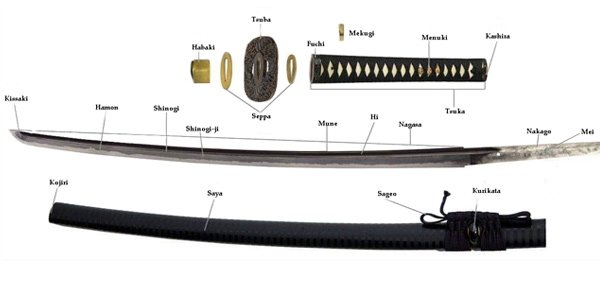
Composed of several distinct parts, each with its own role and importance in the overall structure of the sword. Each of the parts named below plays an essential role in the katana's functionality, but also in its aesthetics.

To provide the best experiences, we and our partners use technologies like cookies to store and/or access device information. Consenting to these technologies will allow us and our partners to process personal data such as browsing behavior or unique IDs on this site and show (non-) personalized ads. Not consenting or withdrawing consent, may adversely affect certain features and functions.
Click below to consent to the above or make granular choices. Your choices will be applied to this site only. You can change your settings at any time, including withdrawing your consent, by using the toggles on the Cookie Policy, or by clicking on the manage consent button at the bottom of the screen.